Logo of the Department of Economics
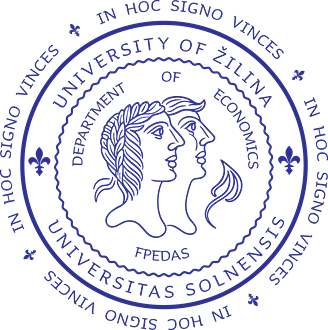
Logo represents one of the most fundamental elements of the visual identity of any institution, not only an academic one. It synthesizes the essential message of its value framework, historical tradition, and current strategic direction — and at the Department of Economics, FPEDAS, University of Žilina, it expresses the identity and mission of the entire workplace.
Biatec — a Reminiscence of the Celtic Numismatic Heritage
The dominant motivic substrate of the emblem is inspired by the iconography of Celtic coins – biateky – minted in the 1st century BC on the territory of present-day Bratislava. These silver and gold numismatic artifacts excelled in a high level of artistic execution and craft precision, which established them as a universal symbol of the economic and commercial maturity of the early state formation on the territory of Slovakia.
On selected variants of the biateky, the depiction of two heads dominates – male and female – which tradition interprets as personifications of the deities Honos and Virtus, embodying honor and valor, or alternatively as portraits of rulers. In the contemporary graphic treatment of the department's logo, these motifs take on a stylized, minimalist form, semantically symbolizing wisdom, rationality, stability, prudence, and balance – fundamental principles of both economic theory and pedagogical practice.
The modern, linear aesthetic interpretation of these attributes emphasizes continuity between past and present – tradition, erudition, and identity are integrally connected with a progressive visual narrative. The logo thus becomes a visual bridge that links ancient cultural heritage with the academic present and future.


The Anjou Lilies — a Heraldic Legacy of the Angevin Dynasty
Around the perimeter of the logotype are placed two so-called Anjou lilies, drawn from the heraldic symbolism of the royal House of Anjou. Their presence evokes significant Hungarian figures – Charles I Robert of Anjou (1288–1342) and Louis I the Great (1326–1382), who had a substantial influence on the history of the town of Žilina. Both rulers left their mark on the town's historical memory through their visits and the granting of key privileges.
During the reign of the Angevin dynasty, Žilina was exempted from toll fees and obtained the right of mile, fishing, and market rights, as well as the privilege of an annual fair. The development of transport infrastructure, particularly the construction of the road to Košice, accelerated trade ties and enabled the dynamic economic expansion of the region.
A result of this expansion was also the creation of the Žilina Town Book – a unique legal, literary, and above all financial-economic document of medieval Slovakia, which codified municipal legal norms, economic organization, and trade rules, thereby becoming a fundamental pillar of the town's legal and economic culture.
Louis I the Great was also the founder of the first Hungarian university in 1367 in the town of Pécs (Päťkostolie). Under the rule of the Angevins, inflation was curbed, and high-quality gold coins (florins and ducats) were minted, which became an international means of payment throughout Europe. Hungary, and therefore also Slovakia, became one of the most significant European powers during the reign of the Angevin dynasty.
Chromatic Scheme and Visual Idiolect
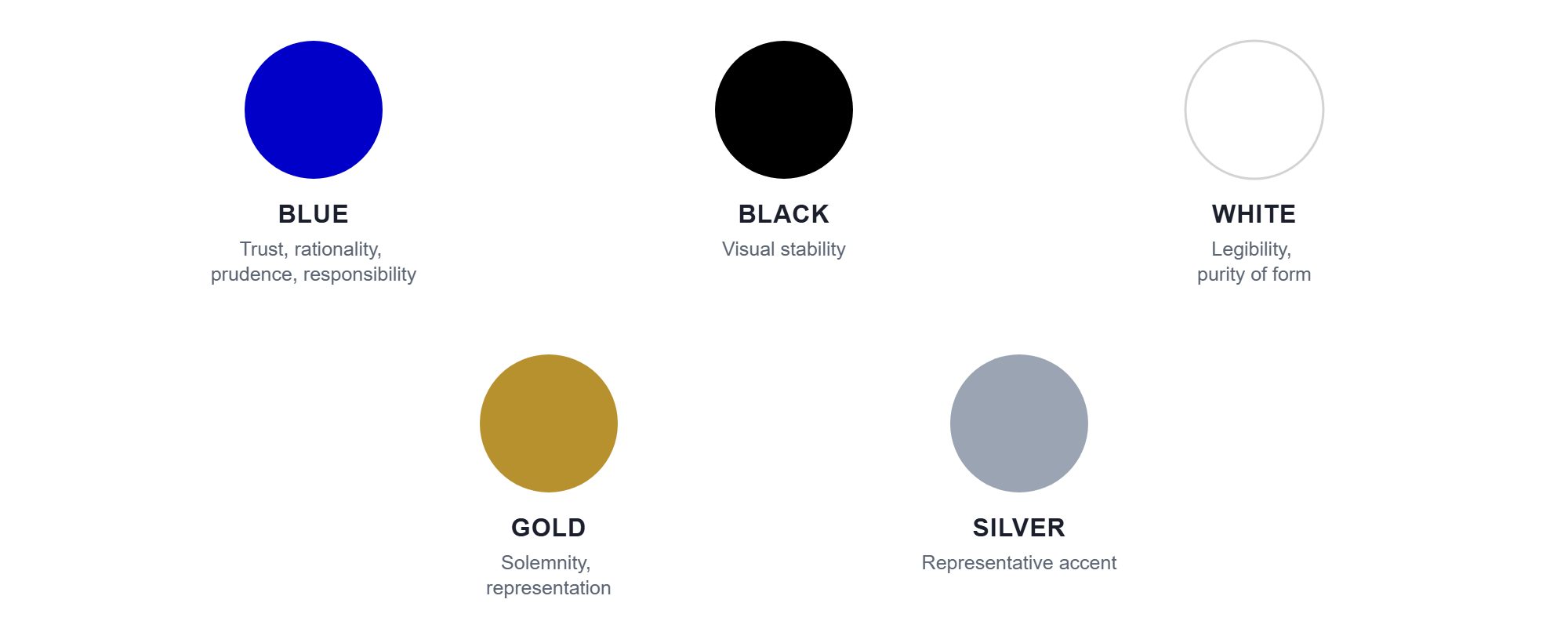
The coloristic concept of the logo accentuates the color blue, a color representing trust, rationality, prudence, and responsibility. Its synergistic combination with black and white ensures visual stability and legibility. Gold and silver, applied as accents, underscore the solemnity and representative character of the entire emblem. The logo's minimalist visual idiolect guarantees its timelessness and contextual universality – it effectively fulfills its function in everyday academic practice as well as at ceremonial and jubilee occasions.
The Logo as a Visual Bearer of Tradition and Continuity
The logo of the Department of Economics, FPEDAS UNIZA, is not merely a graphic signifier, but a complex visual discourse articulating the value of enduring knowledge, the dynamic connection between past and present, and the value of respect for traditions that shaped not only local history but also the broader economic and social context of Slovakia as a whole.
The Biatec signals the legacy of ancient economic sophistication and the development of trade, while the Anjou lilies convey the era of royal patronage, thanks to which the foundation for Žilina's economic prosperity was laid. By integrating these historical symbols into a contemporary visual language, the logo becomes a dignified emblem of the department, which for a quarter of a century has been advancing scientific knowledge, connecting tradition with innovation, and preparing erudite graduates for both economic practice and academic research.
The Logo as Identity and a Symbol of Belonging
Why did we decide to create a logo for the Department of Economics? The decision naturally arose from an effort to strengthen identity and reinforce a sense of belonging not only among current students and faculty, but also former and future ones. Every generation of graduates – from the very first to the most recent – finds in the logo a point of anchoring, a symbol that transcends personal ties to a particular teacher or to the faculty building.
The logo thus becomes a shared emblem representing the values, achievements, dreams, and ambitions of everyone who has passed through the department, and everyone who still will. It is therefore more than just a visual marker – it is a symbol of success, victory, and the fulfillment of aspirations. In this spirit, it is also tied to the quote that became its motto: "In hoc signo vinces" – "In this sign you shall conquer." This message symbolizes the strength, hope, and certainty of victory, success, and fulfillment – values that the department's logo carries to this day.
Why This Logo, Specifically?
The decision in favor of this particular emblem was not accidental, but grew out of a deliberate selection of symbols that, through their meaning and aesthetic form, best express the mission of the Department of Economics. The combination of the biateky and the Anjou lilies creates a unique synthesis of economic tradition, historical legacy, and academic values. We do not view the coat of arms, symbol, or seal merely as a graphic mark, but as an expression of our professional honor, continuity, and academic integrity.
It is a gesture through which we declare our commitment to providing quality economic and financial education, not only in northern Slovakia but also in a broader national and international context. The logo thus embodies not only the past and present, but also our ambitions for the future.